
The black dog

Many of us, like Winston Churchill, have lived our lives with an unwelcome guest in the form of a black dog. For most of my days, I have managed on my own. With or without a partner, before I became a father and later as a parent. I have been in school, at university, or at work. Vacations have been celebrated, sorrows mourned, and moments of joy discovered. Because that is what life is like: it rises and falls, and our mood is like a steering mechanism that follows life’s twists and turns.
Yet several times since reaching adulthood, I have found myself accompanied by the depression that Churchill famously called the Black Dog.
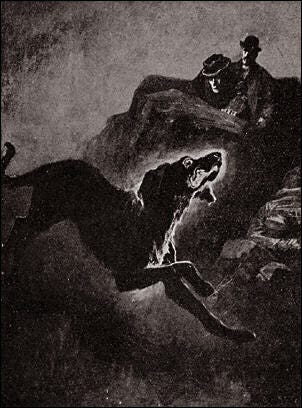
Sometimes it arrived in the wake of a life event that knocked me off balance. Other times I heard the sound of its paws when I least expected it. I have written about these experiences before in my posts The Depressed Psychiatrist Parts 1, 2, and 3.
Most recently, it returned this spring. I had been feeling well for many years—almost embarrassingly well. But a series of setbacks and painful events became too much. As a clinician, I usually cope with whatever comes my way. I rarely allow myself to become stressed or lose my footing. Then my colleagues and I lost a deeply respected colleague and leader, while a family lost a beloved member. The shockwaves spread far beyond individual grief and reverberated through entire organizations. Suddenly, the professional future that had seemed so clear no longer felt quite as certain. In my personal life, a relationship came to an end. I lost not only the most important person in my life but also many of the plans I had imagined for the future. Yet this is the other side of love—the risk one must accept if one wishes to live life fully.
Gradually, I noticed how much harder it became to get out of bed in the morning. Anxiety about the future mixed with grief and shame about the past. Depression distorts one’s sense of time. It feels as though life has always been painful and always will be. The presence of the Black Dog is constant, accompanied by the smell of wet fur. According to Einstein’s theory of relativity, time passes more slowly near massive objects such as black holes.
Severe depression is like a black hole for hope. The closer you drift toward its center, the slower time seems to move.
What It Feels Like
As a physician, I meet people with depression every day. The suffering is always unique, yet there is often a familiar expression. I suspect I looked much the same when I sought help myself.
A furrowed brow that refused to relax. A sense of shame that would not let go. Not even a silly joke could summon more than a strained smile.
The Black Dog sat beside me, commenting on everything that happened.
What did I really have to be happy about?
The relationship had ended because I was a bad person. That was the only reasonable explanation. Someone like me could not expect to be loved. No one would tolerate my quirks for very long. And don’t imagine that will ever change.
Any success I had achieved professionally was probably just luck. Once, I may have imagined myself to be a promising researcher and physician, but now I could finally see the truth. I had gone from being someone with potential to being a disappointment.
The strange thing was that these thoughts did not feel exaggerated. Quite the opposite. They felt sober, rational, and self-evident.
Depression rarely arrives with horns and warning signs. Instead, it arrives with a compelling story about who you are, who you have been, and what you can expect from the future.
And perhaps that is the most insidious thing about the Black Dog. It does not try to convince you of something new. It makes you believe it is finally telling you the truth.
Finding a Way Forward
Too many times in my professional life—and, for that matter, in my private life—I have witnessed people who were unable to drive away the Black Dog. News of a highly accomplished and widely admired colleague in another part of Sweden who suddenly disappeared made it all the more important for me to seek help myself.
Depression is a treatable illness, but one with potentially fatal consequences. At best, it resolves on its own and leaves behind only limited suffering. At worst, the Black Dog takes a life.
There is no shame in developing depression, nor should it be suffered in silence. Help is available, and that help applies even if you happen to be a psychiatrist. How I found that help may be a story for another time.
At its best, the human brain can reflect on its own thoughts, memories, and emotions. It can formulate theories about itself and even create entire sciences devoted to understanding how it works. But when depression strikes, the rules change. The brain becomes judge, witness, and defendant in the same trial.
Perhaps the most frightening aspect of depression is not the darkness itself, but how convincing it feels. The brain mistakes its illness for clarity.
Perhaps that is why we need other people. Friends, family members, therapists, and colleagues who can sometimes hold on to a more hopeful story about us than the one we are capable of seeing ourselves.
When the brain can no longer fully understand itself, it can borrow someone else’s perspective until the fog begins to lift.
And perhaps that is where the Black Dog finally loses its grip.
Thank you for writing this, and for writing it as yourself rather than about a patient. The line that will stay with me is that the brain mistakes its illness for clarity. You would know that from both chairs, which is exactly what makes it hard-won to say out loud.
That a psychiatrist sought help, and then said so in public, does something no clinical paper can. It tells the people reading who are quietly certain their own dark story is simply true that the certainty itself can be a symptom, and that reaching for someone else is not weakness but the one move the illness most wants to talk you out of.
I am glad you made it. And glad you are here to write about it.